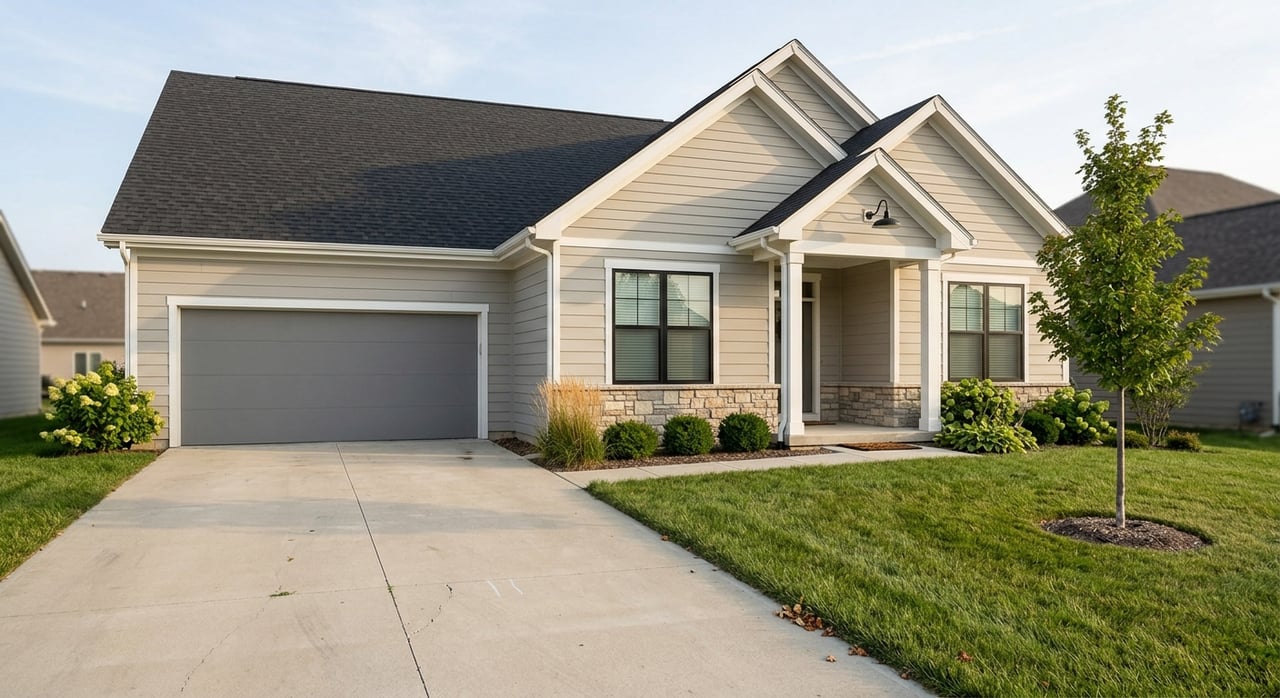
Buying your first home in Waukee can feel exciting and intimidating at the same time. You want a home that fits your budget now, supports your next few years, and still feels like a smart move in a growing market. The good news is that Waukee offers a real range of starter-home options, and once you know what to expect on price, location, and timing, the process gets much clearer. Let’s dive in.
What a starter home costs in Waukee
If you are trying to pin down one exact price for a starter home in Waukee, you will quickly notice that market reports vary. Recent sources show a broad range, with median sale prices around $354,990, average home values near $338,881, and median listing prices around $414,994 depending on how the data is measured. That spread matters because each source tracks something slightly different, including closed sales, modeled values, and active listings.
For you as a buyer, the takeaway is simpler than the stats. Waukee is not a bargain-basement market, but it is also not an all-out bidding war across every price point. In many cases, well-priced homes in the lower-cost townhome and smaller detached-home categories still draw attention, so being prepared helps.
Starter-home options by price band
A helpful way to think about Waukee starter homes is as a spectrum rather than one category. The lowest entry point is often townhomes, then smaller ranch homes, then larger detached new construction that can push into move-up pricing. Your budget will likely shape which type of home makes the most sense.
Townhomes in the low $200Ks
If your top priority is getting into Waukee at a lower price point, townhomes may be your best place to start. For example, Spring Crest Townhomes has been marketed from about $242,000, with roughly 3 to 4 bedrooms, about 1,500 to 1,650 square feet, and attached two-car garages. The HOA also covers lawn care and snow removal.
That setup can be appealing if you want lower exterior-maintenance responsibility. The tradeoff, of course, is monthly HOA dues and less yard independence. When you compare options, make sure you look at the full monthly cost, not just the purchase price.
Smaller detached homes in the low-to-mid $300Ks
If you want a single-family home, Waukee starter pricing often begins in the low-to-mid $300,000s. In Alder Point, for example, ranch plans like the Jasmine and Remson have been listed at $342,500 and $346,600, with about 1,440 to 1,478 square feet, 3 bedrooms, 2 baths, and two-car garages.
This price band can be a sweet spot for buyers who want more privacy and outdoor space than a townhome usually offers. It can also be a strong fit if you want newer construction features without stretching into a much higher monthly payment.
Detached homes in the mid $300Ks and up
Beyond that first detached-home tier, many Waukee communities move into the mid-$300,000s and higher. Communities such as Waukee Crossing start from about $354,900, while Remington Pointe starts from about $374,900. Other neighborhoods, including Painted Woods West and Autumn Valley, offer larger ranch and two-story plans with options like finished basements and 2- to 3-car garages.
These homes may still work for first-time buyers, especially dual-income households or buyers using assistance programs. Still, they often start to overlap with early move-up pricing, so it is important to define your ceiling before you begin touring homes.
Why Waukee has so many newer starter homes
One thing that stands out in Waukee is how much of the starter-home inventory is newer construction. That is tied directly to the city’s growth. Waukee’s official materials describe Kettlestone as a 1,300-acre mixed-use development expected to build out over 25 years, with housing, retail, office space, parks, ponds, and trails.
The city’s development pipeline also shows multiple residential plats and site plans still under review. In practical terms, that means you are not just shopping older resale inventory. You are also looking at a steady flow of newer townhomes, rowhomes, and single-family homes coming online in different parts of the city.
What that means for you
Newer homes can offer appealing floor plans, modern finishes, and lower immediate maintenance needs. At the same time, newer communities may come with HOA dues, phased construction, or a longer list of upgrade decisions if you are buying before completion.
Waukee’s neighborhood design guidelines specifically call for a range of housing types, sizes, and prices with access to trails, parks, open space, and neighborhood services. That planning approach helps explain why buyers can often choose between low-maintenance townhomes and detached homes within newer community settings.
Where to look in Waukee
Waukee gives starter-home buyers more than one path. Some buyers focus on new construction corridors, while others look for resale opportunities in established neighborhoods with active inventory. Your ideal area depends on your budget, timeline, and how much home maintenance you want to take on.
Newer growth areas
The city’s current development list includes areas like Silverleaf, The Villas at Kettlestone, Maple Street Village, Hope Springs, and Remington Pointe. These projects show that new housing is still actively being added in Waukee through both townhome-style and single-family development.
Kettlestone deserves extra attention if location and convenience matter to you. The city describes it as a major growth corridor with access to Interstate 80 via Grand Prairie Parkway, along with retail, dining, parks, trails, housing, and office uses. For many buyers, that makes west and southwest Waukee especially worth watching.
Resale neighborhoods to watch
Neighborhood-level market data also shows active inventory in areas like Glynn Village, Windfield, Willow Brook, Grant Park, and Downtown Waukee. Reported median neighborhood listing prices include about $364,245 in Glynn Village and $337,500 in Windfield, which can help frame where entry-level or early move-up options may appear.
That does not mean every home in those areas will match those numbers. It does mean you may find useful price points outside brand-new construction, especially if you are open to comparing age, layout, and lot size.
How to budget beyond the purchase price
One of the biggest mistakes first-time buyers make is focusing only on the sticker price. Your real budget should account for the full monthly payment. That can include principal, interest, property taxes, mortgage insurance, homeowners insurance, flood insurance if applicable, and HOA dues.
This matters a lot in Waukee because many starter-home choices are in townhome communities or newer subdivisions. A home with a lower purchase price may not always mean a lower monthly cost if dues and insurance shift the math. Looking at the whole payment helps you shop with more confidence.
Why preapproval matters early
When you are ready to shop seriously, preapproval is one of the first steps worth taking. Buyers often need a preapproval letter before a seller will accept an offer, and those letters commonly expire in 30 to 60 days. That means timing matters.
If you get preapproved too early, you may need an update before you actually write an offer. If you wait too long, you could lose time when the right home appears. In a market like Waukee, where well-priced starter homes can still move quickly, that gap can matter.
Iowa programs that may help first-time buyers
If you are buying your first primary residence, Iowa offers programs worth reviewing. Through Iowa Finance Authority’s FirstHome program, eligible first-time buyers may qualify for a $2,500 grant or a second loan of up to 5% of the home’s sale price or appraised value. The second loan has no monthly payments required.
The program generally requires that you have not owned a primary residence in the last three years, that you occupy the home as your primary residence within 60 days of closing, and that you meet credit and debt-to-income guidelines. The state also lists a home purchase limit of $544,000, with up to $665,000 possible in targeted areas. Because program details and address eligibility matter, it is smart to verify qualifications before you build your plan around it.
If you are not a first-time buyer, Iowa’s Homes for Iowans program may still be relevant because it is available to both first-time and repeat buyers purchasing a primary residence in Iowa.
What the buying timeline can look like
A smooth Waukee purchase usually starts with financing prep. Once your preapproval is in hand, you can move into tours and comparisons much more efficiently. If you find the right home and get under contract, the process can move quickly from there.
One key milestone happens near the end. Buyers must receive the Closing Disclosure at least three business days before closing, which gives you time to review your final loan terms and fees before signing. That review window is an important part of staying informed and avoiding last-minute surprises.
Smart starter-home tips for Waukee buyers
If you want to make a confident first purchase in Waukee, keep these points in mind:
- Compare home type before price alone. A townhome and a detached ranch may look close on paper, but monthly costs and maintenance can differ.
- Watch the full payment. HOA dues, insurance, and taxes can change what feels affordable.
- Stay open on location. Newer growth corridors and resale neighborhoods can offer different kinds of value.
- Know your must-haves. Focus on layout, commute, and monthly comfort before cosmetic features.
- Move with a plan. Preapproval, quick tours, and fast decisions matter when a well-priced home hits the market.
The bottom line on buying in Waukee
Waukee can be a strong place to buy your first home if you go in with the right expectations. Starter-home options are available, but they usually fall into clear price bands, from townhomes in the low $200,000s to smaller detached homes in the low-to-mid $300,000s and beyond. Because the city continues to grow, you also have the advantage of comparing both new construction and resale opportunities across several parts of town.
If you want local guidance on neighborhoods, price points, or how to compare starter-home options in Waukee, the Ingrid Williams Real Estate Team is here to help you make your next move with clarity.
FAQs
What is a typical starter-home price in Waukee?
- A practical range is townhomes around the low $200,000s, smaller detached ranch homes in the low-to-mid $300,000s, and larger detached new construction in the mid-$300,000s and above.
Are townhomes a good starter-home option in Waukee?
- Townhomes can be a strong option if you want a lower purchase price and less exterior maintenance, but you should compare HOA dues and overall monthly cost before deciding.
Which Waukee areas should first-time buyers consider?
- Buyers often look at newer growth areas like Kettlestone and other active development zones, along with resale neighborhoods such as Glynn Village, Windfield, Willow Brook, Grant Park, and Downtown Waukee.
Can first-time buyers get assistance in Iowa?
- Iowa Finance Authority’s FirstHome program may offer eligible first-time buyers a $2,500 grant or a second loan of up to 5% of the home price or appraised value, subject to program rules and property eligibility.
How early should you get preapproved when buying in Waukee?
- You should typically get preapproved when you are ready to shop seriously, since sellers often expect a preapproval letter and many letters expire within 30 to 60 days.